
 3x3 Speed Cubes
 2x2 Speed Cubes
 4x4 Speed Cubes
 Pyraminx Speed Cubes
 Megaminx Speed Cubes























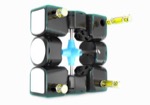
Tension Tuning for Peak Performance: Adjusting Screws and Internal Tension

Tension Tuning for Peak Performance: Adjusting Screws and Internal Tension
Peak performance isn't born from one big breakthrough; it's cultivated through countless small adjustments. In the world of tools, machines, sports gear, and even human performance, tension is a governing force. It sits at the intersection of precision and power: the preload on a bolt, the string pull on a guitar neck, the bend in a bow, the spring in a valve, the mental pressure a performer carries into a moment. The art of tension tuning is the practice of understanding where tension lives-in the screws you tighten, in the internal energy stored in materials, and in the soft, invisible forces inside the body or system-and then aligning those tensions to unlock superior performance. In this post, we'll explore what tension tuning means, how to measure and adjust it safely, and how to apply the idea across a range of domains-from instrument setup to high-performance sports equipment to the mental mechanics of focus and resilience.
Understanding Tension: External vs Internal
When we talk about tension, we can be referring to two related but distinct concepts: external tension and internal tension. External tension is the load or force applied to a system from the outside. Think of a string under tension, the preload in a bolt after you tighten it, or the cable strain that keeps a bicycle wheel in tune. External tension is often what you feel in your hands as you tighten a screw or adjust a dial; it's what you measure with a torque wrench, a tension meter, or a scale.
Internal tension, on the other hand, is the energy stored inside a system as a result of its design, materials, or prior loading. It can be deliberate-such as the stored energy in a compressed spring or the preload in a pre-tensioned cable-or it can be residual-internal stresses trapped in metals after fabrication. Internal tension is what you tap into when you bend a bow, when the neck of a guitar is pulled taut by strings, or when a frame resists sudden loads due to its own stiffness and geometry. It's this duality-external control and internal energy-that makes tension tuning both powerful and delicate.
The Tools of Tension Tuning
To tune tension effectively, you need the right instruments and a disciplined approach. The tools fall into a few broad categories:
- Torque and preload tools: torque wrenches, calibrated screwdrivers, and hex/Allen keys to apply precise preload to screws, bolts, and fasteners.
- Measurement devices: tension meters for strings or cables, spring scales, dial indicators, digital calipers, micrometers, and strain gauges for more advanced work.
- Feedback devices: accelerometers or vibration sensors to detect resonance or unwanted oscillations; frequency analyzers to identify natural frequencies and damping characteristics.
- Documentation: notebooks or digital logs to track settings, measurements, and observed performance changes over time.
- Safety gear: protective eyewear, gloves, and proper clamps or work stands to prevent slips and injuries during adjustment.
Beyond the hardware, effective tension tuning also requires a disciplined process: establish a baseline, define a target profile, apply small, controlled changes, measure results, and iterate. The more you can quantify the change you're making, the better you can understand how tension influences performance and where to stop-before you overshoot and create a new problem.
Principles You Need to Know
Several core principles underlie tension tuning. Understanding them helps you plan adjustments, anticipate side effects, and avoid common mistakes.
1) Preload and Contact Stability
When you tighten a fastener, you don't just make the external load larger; you create preload that clamps components together. This preload reduces micro-movements, improves alignment, and prevents loosening under dynamic loads. The right preload creates a stable interface, which is essential for repeatable performance. Too little preload, and parts slip or vibrate; too much preload, and you risk thread stripping, material yielding, or warping.
2) Internal Tension and Material Behavior
Internal tension is not a fixed property. Materials creep, relax, and respond to temperature, humidity, and cycling. A spring may lose torque over time; a neck may bow slightly under string tension; a frame may flex more in cold weather. When tuning, you need to account for these time-dependent behaviors. A small initial preload may drift as components settle or as the system experiences thermal changes. The best tuning plans anticipate these shifts by including margin and periodic recalibration.
3) Stiffness, Damping, and Resonance
Every structure has a natural frequency. When external forces excite that frequency-through impacts, vibrations, or repetitive loading-the system can resonate, amplifying motion and possibly causing damage or performance degradation. Tuning often involves adjusting stiffness and damping to shift natural frequencies away from excitation ranges, or to damp them out with appropriate materials or geometries. In practice, this might mean changing bolt patterns, adding a damper, or selecting a different wire gauge or string tension to alter stiffness in a controlled way.
4) Alignment, Friction, and Interface Quality
Even small misalignments or imperfect contact surfaces can magnify friction, micro-movements, and wear. A misaligned screw can introduce uneven preload, which in turn creates bending moments or torsion in nearby components. The lesson: ensure that interfaces are clean, surfaces are properly seated, and fasteners are tightened in the correct sequence to achieve even preload distribution. When friction dominates, it can mask the true effect of your tension changes, making measurements noisy or misleading.
5) Incremental Change and Measurement Fidelity
Humans have a bias toward big changes, but the law of diminishing returns applies here. Tuning should be incremental. Small, well-documented steps allow you to attribute performance changes to specific adjustments, rather than to random variation or external factors. Consistency in testing conditions-temperature, time of day, equipment wear-helps separate real effects from noise.
A Step-by-Step Guide to Tension Tuning
Whether you're tuning a precision instrument, a performance rack, or a mechanical system, the following workflow provides a practical, repeatable approach.
- Define the objective. What does peak performance look like for this system? Is it higher consistency, more responsiveness, louder output, or reduced vibration? Establish a measurable target (e.g., reduce harmonic amplitude by 20%, increase string tension by 5 pounds, improve repeatability by 0.01 mm).
- Baseline measurement. Record current tensions, readings, and performance metrics. Note environmental conditions and any signs of wear or fatigue. Capture multiple trials to understand variability.
- Set safe operating ranges. Consult manufacturer specifications or engineering judgment to define acceptable ranges for preload, tension, and deflection. Always build in a safety margin to prevent overtightening or fatigue.
- Plan adjustments in small steps. Choose an adjustment magnitude that you can reliably detect-often in the 2-5% range of the current value or a fixed unit change (e.g., +5 N, +0.5 turns). Avoid leaps larger than one recommended increment at a time.
- Make the adjustment with care. Use proper tools, follow the correct tightening sequence, and tighten gradually to the target preload. If available, use a torque-limiting tool to avoid overshoot.
- Test and observe. After each adjustment, run the same test or performance protocol you used in the baseline. Compare results to determine whether the change moved you toward the objective.
- Document every change. Record the setting, measurement, test result, and any notes about temperature, humidity, or recent use. A clear log makes it easier to reproduce or revert.
- Iterate as needed. If a change yields improvement, you may continue with small refinements. If the results plateau or degrade, stop and reassess for alternative approaches (different interface materials, alternate preload distribution, or even a design modification).
- Validate long-term stability. After reaching a desirable setting, run extended tests to ensure the performance holds under expected duty cycles and environmental conditions.
Domain-Specific Case Studies
Applying tension tuning concepts across domains can make the approach concrete. Here are some illustrative case studies that highlight practical steps, trade-offs, and the value of a methodical process.
Case Study 1: Stringed Instruments - Guitars, Violins, and Beyond
In stringed instruments, tension is primarily set by the strings themselves, but the neck experiences internal tension due to string loading. Precision tinkering focuses on neck relief, truss rod adjustment, bridge saddles, and nut/string saddle heights. While you wouldn't typically "tune" the neck with a torque wrench in the same way you would hardware, you can apply tension tuning principles in a controlled way:
- Baseline: Record string gauges, typical tuning, and neck relief using a straightedge or neck relief gauge. Note action at the 12th fret and any fret buzz.
- Internal tension awareness: Higher string tension increases neck pull. If the neck is stable, you may be able to increase string tension for brighter tone or more tension stability; if the neck is already under heavy load or shows relief anomalies, you might need relief adjustments instead of heavier strings.
- Screw-driven adjustments: Truss rod nuts sit behind the neck. Adjusting the truss rod changes neck relief; do so in small increments (e.g., 1/8 turn) and let the neck stabilize before re-measuring. Always follow manufacturer guidance for retention and lubrication.
- Outcome: The aim is a balance between minimal buzzing and comfortable playability with consistent intonation. Changes should be incremental and reversible.
Note: Guitars and violins involve material compliance and diverse joint geometries, so the "tension tuning" is as much about harmonizing string tension with neck dynamics as it is about precise mechanical preload. Always prioritize the instrument's structural integrity and take extra care with sensitive resonant components.
Case Study 2: Rackets and Bats - String Tension and Frame Response
In tennis or badminton, the tension of the strings, the stiffness of the frame, and the overall mass distribution together determine power, control, and feel. Tension tuning here means balancing string tension with frame dynamics to achieve a desired response without risking frame deformation or string breakage.
- Baseline: Establish a typical string tension range for your racket or bat. Record the feel, control, and power metrics (e.g., shot accuracy, sweet spot feel).
- Internal tension considerations: Higher string tension increases lattice stiffness and energy transfer but also raises the risk of frame stress and edge cracking under mis-hits. Be mindful of the frame material limits.
- Adjustment approach: If you want quicker response and tighter control, consider modest increases in string tension (e.g., +2-5 kgf) while monitoring vibration and frame response. If you notice excessive frame flex or harsh feel, reduce tension slightly.
- Monitoring: Use a string tension meter to verify actual tensions and ensure your adjustments stay within recommended ranges. Document impact tests and shot characteristics to quantify improvements.
In racket tuning, the harmony between string tension, frame stiffness, and weight balance is the essence of performance. Small, careful adjustments often yield noticeable differences in control without compromising reliability.
Case Study 3: Archery - Limb Tension and String Preload
For bows, tension tuning is critical for predictable behavior and consistency. The limbs store energy that is released as the arrow is propelled, so tuning focuses on limb alignment, limb bolts, and string tension.
- Baseline: Record draw weight at standard draw length, limb alignment, and arrow flight characteristics. Inspect string wear and limb tip condition.
- Internal tension awareness: The bowstring exerts a high, elastic tension that translates into limb deflection. Lighter bows have different dynamic responses than heavier ones; the rider's technique also interacts with this tension.
- Adjustment approach: Use limb bolts to fine-tune until the tiller (the balance between upper and lower limbs) is even. Adjust string nocking point and brace height to fine-tune accuracy and consistency. Tuning often involves slight changes to bowstring length and cam arrangement in compound bows.
- Safety: Bow tuning involves high energy; always use protective equipment and ensure the setup is secure before testing with arrows. Make small adjustments and test at safe distances and controlled ranges.
Archery tuning emphasizes the dynamic coupling of energy storage and release. The goal is to achieve repeatable arrow flight with minimal wobble and clean release, which depends on how well internal tension is managed and how external loads (string, limbs, cams) are coordinated.
Case Study 4: Bicycles - Cable Tension and Frame Integrity
On bicycles, tension control centers on cables (brake and derailleur), hoses, and the frame's stiffness. Proper tension ensures precise shifts, reliable braking, and efficient power transfer, while avoiding cable fraying, housing compression, or frame misalignment.
- Baseline: Check derailleur and brake cable tensions according to manufacturer specifications. Inspect housing ferrules, ferrule alignment, and cable ends for frays.
- External tension management: Tightening a derailleur cable increases tension in the cable housing and the derailleur mechanism. The preload interactions with the pulleys determine shift accuracy.
- Internal tension considerations: The frame's stiffness interacts with the rider's weight, road vibrations, and temperature. Changes in tension can alter vibration modes, which influence ride quality and fatigue.
- Adjustment strategy: If shifting feels vague or jumpy, adjust derailleur cable tension in small increments, test, and observe. If braking feels spongy or inconsistent, re-check the brake cable tension under load and verify the brake pad alignment.
In cycling, deliberate tension tuning improves control and response, but it must be paired with proper alignment and wear checks. The rider's technique can also affect perceived tension, so consider training the rider's input alongside mechanical adjustments for best results.
Case Study 5: Industrial and Robotic Systems
Industrial machines and robots rely on precisely tuned tensions in belts, cables, springs, and actuators to deliver accurate movements and safe, repeatable performance. In these systems, tuning often involves a combination of preload, servo control settings, and damping to reduce overshoot and oscillations.
- Baseline: Map out all tensioned elements-belts, springs, and cables. Measure current stretches, belt tensions, and load profiles. Confirm that sensors and actuators align with specified ranges.
- Internal dynamics: Consider the energy stored in springs, potential energy in hydraulics, and the inertia of moving parts. Tuning isn't just about tightening screws; it's about shaping the system's dynamic response.
- Adjustment approach: Use torque-limiting tools to set preload where applicable; adjust servo gains, damping parameters, and control loops to achieve stable motion with minimal overshoot. Validate with repeatable cycle tests.
- Safety: Many industrial systems operate under high loads; follow lockout-tagout procedures, use protective enclosures, and validate adjustments in a controlled environment before resuming full operation.
Industrial and robotic tuning demonstrates the power of combining mechanical preload with control system tuning. The most precise results often come from coordinating hardware adjustments with software feedback for a cohesive performance improvement.
Measuring and Monitoring Internal Tension
Quantifying tension is the foundation of repeatable tuning. Depending on the domain and level of precision required, you can employ a range of measurement approaches:
- Direct preload measurement: Use torque wrenches or calibrated screwdrivers to set and verify preload in fasteners. Record the torque value and convert it to preload if you have a known torque-to-preload relationship for the joint.
- String or cable tension: Use a tension meter, scale, or calibrated device to measure the force in strings or cables. For higher accuracy, cross-check with multiple measurements at different points in the cycle.
- Deflection and stiffness: Use dial indicators, calipers, or digital sensors to measure deflection under known loads. This helps infer stiffness and assess how tension changes affect structural response.
- Dynamic monitoring: Employ accelerometers, vibration sensors, or endpoint sensors to detect resonances or oscillations. Anomalous frequencies often reveal suboptimal tension distribution or damping.
- Temperature and environment: Record environmental conditions because tension and material properties are temperature-dependent. A good tuning plan accounts for expected environmental ranges.
In practice, you'll often combine these methods. Start with straightforward preload verification, then move to dynamic measurements to catch subtle changes in performance or stability. The goal is robust, repeatable performance under real-world conditions, not just in a controlled test bench.
Safety and Maintenance: Tension Tuning Without Breaking Things
All tuning activities carry risk, especially when dealing with high energy, high loads, or precision components. Here are key safety and maintenance guidelines to keep in mind:
- Know the limits: Always consult manufacturer specifications for allowable preload, tension, and deflection. Exceeding limits can cause thread stripping, material fatigue, or catastrophic failure.
- Go slow: Make small, incremental changes and test thoroughly before proceeding. Creep and settling can mask the results of a single adjustment if you don't give the system time to stabilize.
- Lock and verify: After tightening, verify that fasteners are properly seated and that any locking mechanisms (thread-lockers, lock nuts, or thread seals) are appropriate for the application.
- Inspect for wear: Regularly inspect interfaces, fasteners, cables, and hoses for signs of wear, corrosion, or fatigue. Replace parts as needed before performance degrades or safety becomes compromised.
- Respect safety gear and procedures: High-torce jobs, heavy machinery, and archery setups all require appropriate PPE and safe workflows. Never bypass safety steps for the sake of speed.
Maintenance isn't a one-off step. It's a continuous loop of rechecking, recalibrating, and re-validating as components wear, conditions change, or new performance targets emerge. A well-maintained tuning program pays off with better reliability and longer equipment life.
The Psychology of Internal Tension and Peak Performance
Performance isn't only about physical tolerances and precise instrument readings. Internal tension-mental tension, focus, and rhythm-plays a critical role in peak performance. When the mind is free of competing pressures and aligned with a clear objective, the observable mechanical tension tends to behave more predictably. Conversely, mental tension can amplify perceived resistance, alter reaction times, and degrade consistency. Tension tuning, in this broader sense, includes:
- Establishing a pre-performance routine to settle nerves and stabilize breathing, which reduces unnecessary internal micro-tension that could affect focus or precision.
- Creating predictable, repeatable testing conditions so the operator's mental state has less to explain away as an outside factor.
- Using simple, reliable benchmarks to track progress over time, thereby turning subjective impressions into data you can trust.
In short, tension tuning benefits from harmonizing the physical system with the performer's psychology. The best results often come from matching a well-tuned hardware system with a trained, calm, and focused operator or athlete.
Common Mistakes and How to Avoid Them
As you embark on tension tuning, you may encounter familiar pitfalls. Here are a few and how to sidestep them:
- Over-tightening camouflage: It's easy to believe more preload is always better, but excessive preload can cause fatigue, stress concentrations, or failure. Always stay within recommended limits and verify results with tests.
- Ignoring thermal effects: Temperature changes can alter tension and dimensions. If your environment varies, perform measurements across the relevant temperature range or include temperature compensation in your model.
- Relying on a single metric: A single number (e.g., tension value) rarely tells the whole story. Use a suite of measurements (preload, deflection, vibration, and performance outcomes) to form a holistic view.
- Skipping documentation: Without logs, you'll repeat or forget adjustments. Document every step, including the rationale and the observed outcomes.
- Inconsistent testing conditions: Weather, time of day, and operator technique can all influence results. Strive for consistency or explicitly account for variations in your analysis.
Putting It All Together: A Simple Quick-Start Plan
If you're ready to start tension tuning on a practical project, here's a compact, repeatable plan you can follow in a weekend project or a maintenance cycle:
- Choose a target performance metric that matters for your system (e.g., tighter tolerances, faster response, lower vibration).
- Document baseline tensions and performance. Take notes and, if possible, video or record audio for later analysis.
- Review manufacturer notes and safety specifications to determine safe adjustment ranges.
- Plan a sequence of small adjustments (e.g., 1/8 turn on a screw, or +2 kgf string tension).
- Adjust one parameter at a time, hold for stabilization, and re-measure with the same protocol.
- Compare results to baseline. If there's improvement, decide whether to continue or consolidate the setting; if not, revert to the previous state and try an alternative approach (e.g., different preloads, different damping materials).
- Repeat until you reach satisfactory stability and performance. Finally, monitor the system over longer cycles to confirm durability.
Conclusion
Tension tuning is not just a technical practice; it's a mindset about how to approach performance in a disciplined, repeatable way. By understanding the distinction between external tension (the loads you apply) and internal tension (the energy stored within materials and structures), you can craft adjustments that improve stiffness, stability, control, and resilience. The tools you use-torque wrenches, tension meters, strain gauges, and vibration sensors-are not ends in themselves but means to reveal how small changes cascade into meaningful performance gains.
Whether you're dialing in a guitar, tuning a tennis racket, balancing an archery bow, fine-tuning a bicycle, or calibrating an industrial robot, the core principles stay the same: apply precise preload, respect materials' limits, monitor both static and dynamic responses, and document everything so you can learn, repeat, and improve. And as you extend the concept beyond hardware, remember that the most repeatable, scalable peak performance often comes from aligning the outer tension you control with the inner tension you cultivate-preparing your tool, your equipment, and your own mind to perform in harmony when it matters most.
LIKED THIS ARTICLE? SHARE IT: